Written by: Emmilie Kuks, packaging specialist at Now New Next
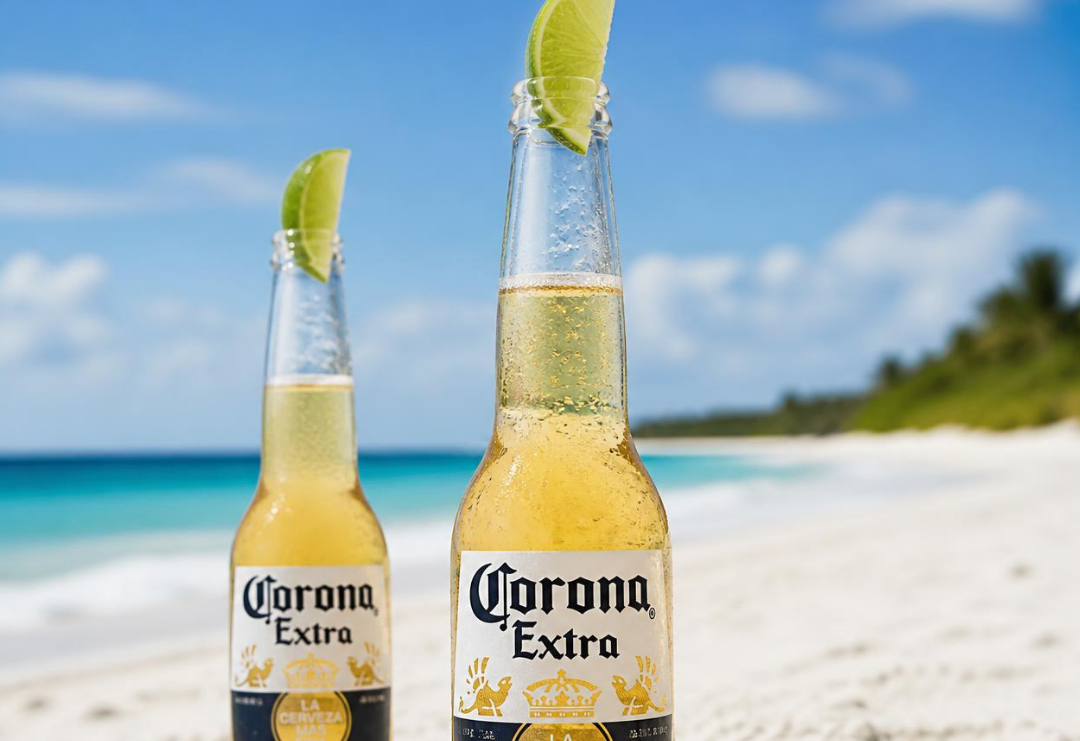
It’s around 4 o’clock in the afternoon on the coast of Yucatán, Mexico. 29 degrees. I’m sitting with my feet in the sand at a rickety plastic table, and a Corona beer is placed in front of me, so cold that condensation immediately starts running down the glass.
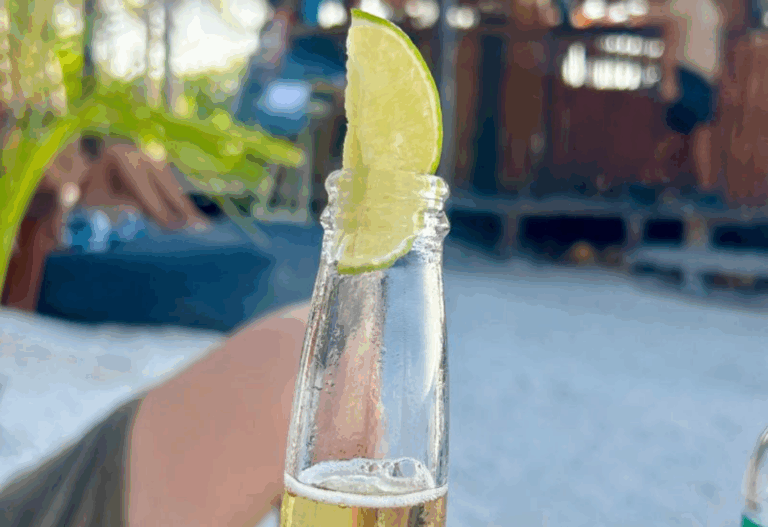
Perched on the neck of the bottle: a slice of lime. Without thinking, I do what everyone does. I put my thumb on it, push it in and drink. It’s an action you’ve never consciously learnt, yet it feels natural. So that the lime juice mixes with the cold Corona.
Twenty minutes later, I hold an empty bottle up to the light. At the bottom lies that wedge. Greenish-white, swollen, utterly pleased with itself. And I think: how on earth do I get that thing out now?
I’ve tried. Shaking, tilting, sucking, tapping the bottom. My boyfriend watched, just as he now watches all my unwrapping moments, with the look of someone who knows this is going to take longer than necessary. But that neck is too narrow. The wedge goes in with a single push but won’t come out again.
That’s the moment when this stopped being a holiday ritual for me. Because I wasn’t holding an empty bottle. I was holding a container that, in Mexico, is very likely a returnable bottle, with a piece of fruit inside that can’t get out. And that’s where the problem begins. That lime isn’t a garnish; it’s an unsolicited part of the packaging. It solves one problem whilst simultaneously creating a new one in the car wash.
Why is that little wedge in there in the first place?
The stories about it are better than the truth. It’s said to keep flies away. To scrub rust spots off the crown cap. To sanitise the neck of the bottle in a country where tap water isn’t your friend. All plausible, none proven.
The most likely story is far simpler: a barman in 1981 who bet a friend he could turn it into a trend. He won. The lime is widely regarded as one of the reasons Corona overtook Heineken in the US.
But there is certainly some science behind it. Beer and sunlight are not a good combination. Light breaks down the bitter compounds in hops, producing a scent that bears a striking resemblance to what a skunk emits. You can smell it even in minute quantities, and in direct sunlight it happens within half a minute.
Brown glass blocks out most of that light. Green glass blocks out a little. Clear glass, such as that used for Corona, blocks out virtually none.
In other words: the brand deliberately chose a bottle through which you can see the product, thereby accepting a risk to the flavour. The lime masks that risk. A garnish that quietly solves a packaging problem – secretly quite brilliant. In the short term.
Fun fact: Mexicans usually squeeze the lime over the top and place it next to the bottle. Pushing it inside is mainly a tourist ritual that’s been re-imported, as I discovered after asking around. So, with my thumb on that wedge, I was exactly the tourist I thought I wasn’t…
The bottle is smarter than you think
But the Corona bottle itself is also worth mentioning. Take a good look at a Corona bottle. There’s no paper label on it. The label is screen-printed directly onto the glass using ceramic ink and fired in a kiln. This is called Applied Ceramic Labelling, and it’s scratch-resistant, waterproof and can withstand a car wash.
Why would you do that? Because the bottle is meant to be returned.
In Mexico, around half of the glass bottles produced by Grupo Modelo, Corona’s mother company, are returnable. Of these, around 96 per cent are returned to the supply chain. A returnable bottle in good condition can be reused for years before the glass is remelted.
So: a bottle designed to be reused, with a label designed to be reused.
What happens in the bottle-washing line
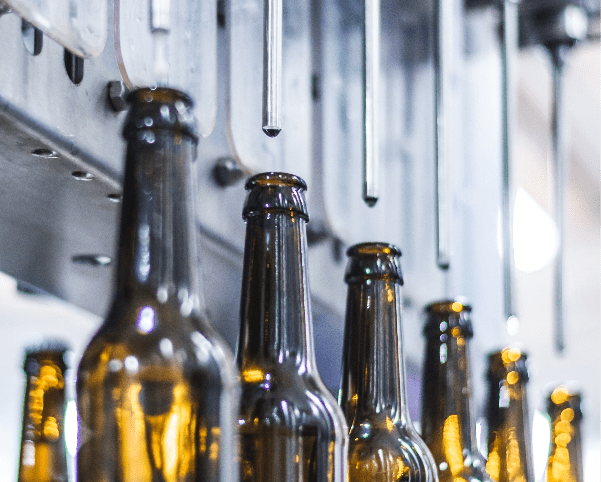
At a large brewery, a return bottle passes through a bottle-washing machine with several lye baths. These contain approximately two per cent caustic soda solution, at temperatures of up to around 80 degrees. This is followed by the empty bottle inspector: cameras and sensors that check the base, the side walls, the neck rim and any residual liquid.
It’s a fast process. Research on a brewery production line showed speeds of 40,000 to 46,000 bottles per hour. Do the maths: that’s more than ten bottles per second.
And what about the rejection rate during that inspection? In the same study, it ranged between 4 and 8 per cent, and this increased as the line ran faster. Every rejected bottle is one that disappears from the stock and has to be replaced.
I haven’t found any figures on how many of those are lime bottles. But 80-degree lye doesn’t always manage to push a thin strip of peel through a neck just a few centimetres wide. And whatever doesn’t come out is spotted. And rejected.
But there’s also a nuance
Rest assured: if you pop that bottle into the glass recycling bin, the problem is limited. In glass recycling, the shards are stored for around eight weeks, during which time food and drink residues disappear naturally. Organic material is therefore not the main culprit. Stone, ceramics and porcelain are: a single piece of contamination costs six to seven good shards during sorting.
But it’s a different story when it comes to reuse. Take the Brown Dutch Return Bottle, our own beer bottle from the 1980s. Designed for up to forty refills, in practice it averages around twenty. A single Brown Dutch Return Bottle therefore replaces more than twenty single-use bottles. And… that bottle is brown, so you don’t need a slice of lime with it. Although, according to connoisseurs, a slice of lime is superfluous with good-quality beer anyway.
Why this matters now
The PPWR will apply in all EU Member States from 12 August 2026. For beverage packaging, a reuse target will be added to this.
This means that in the coming years, we’ll be designing far more packaging that needs to be returned. And that changes the question you, as a brand, need to ask yourself. Not just: will this packaging survive the car wash? But also: will this packaging survive the consumer?
Because people do things with packaging that weren’t in the briefing. A cigarette butt in a bottle used as an improvised ashtray. Chewing gum thrown in for convenience. A wedge of lime because that’s what you’re supposed to do. We call that user behaviour; the recycler calls it contamination; and the process calls it rejection. So ‘design for reuse’ isn’t just about thicker glass and washable labels. It’s about what fits into the neck and can be taken out again.
Finally, a little fact for your barbecue this summer. In a study published in the Journal of Environmental Health, 76 lemon wedges from 21 restaurants were sampled. Nearly 70 per cent showed microbial growth, with 25 different microorganisms. No outbreaks have ever been linked to this, and your immune system can cope just fine. But we can safely let go of the idea that that lime sanitises your bottle.
From now on, I’ll squeeze mine over the bottle and place it next to it. Just as they do in Mexico itself. It doesn’t make the beer any less tasty, and the bottle gets a second go.
Salud!

This column is a collaboration between Easyfairs and Emmilie Kuks. Emmilie Kuks, a sustainable packaging specialist, writes an article about what inspires and excites her in the world of packaging. In her previous column, Emmilie explains how design and materials can work together to create added value.
Since 2024, Emmilie Kuks has been a Sustainable Packaging Specialist at Now New Next, an all-round design agency specialising in ‘branding & packaging design’ with a focus on the ever-changing consumer and sustainability.